Before Neuroscience Had a Name: The Ancient Pathways of Human Flourishing
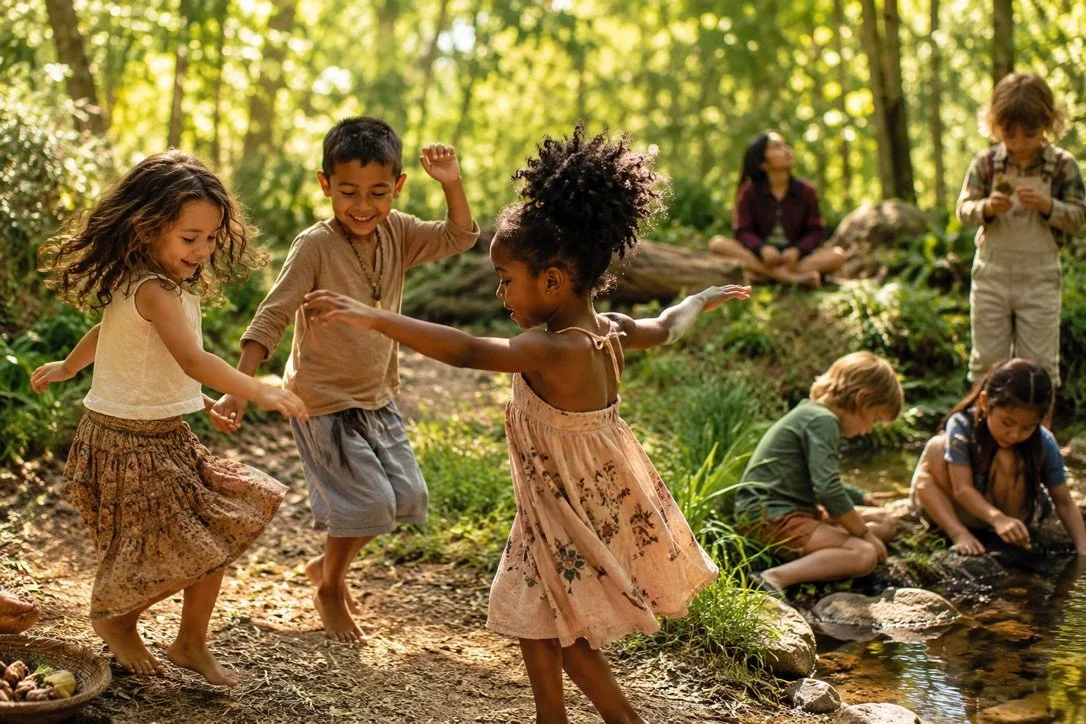
Long before neuroscience gave us words such as regulation, neuroplasticity or social engagement, people across the world were exploring what helps human beings flourish.
Across cultures and generations, communities developed practices of singing, storytelling, movement, prayer, meditation, ceremony and dance. These practices emerged through lived experience, observing what helped people endure hardship, restore balance, strengthen relationships and find meaning.
Today, neuroscience offers new ways of understanding some of these experiences by examining the nervous system, attention, emotion and the biology of connection.
The science may be new, but many of the practices are ancient.
Before laboratories, there were communities
Long before brain imaging, people recognised that rhythm, relationships and environments influenced how they felt and functioned.
A caregiver's voice could soothe a distressed child.
A shared song could unite a community.
Ceremony could support people through grief.
Dance could strengthen belonging.
Stillness could restore attention.
These experiences were not separate from biology, they were expressions of human development lived in relationship.
Rhythm has always mattered
Human development begins in rhythm.
Before birth, a child experiences heartbeat, movement and voice. After birth, rocking, singing, walking and predictable routines continue to support regulation and connection.
Across cultures, rhythm has been expressed through music, movement, chanting and ceremony.
Modern neuroscience now explores how rhythm influences attention, emotional regulation and social synchrony, offering one way of understanding practices that communities have valued for generations.
The voice, movement and attention
Before children understand words, they recognise tone, rhythm and emotional presence.
Across cultures, songs, stories, prayers and call-and-response traditions have supported connection and shared attention.
Movement has also always been central to human life. Children instinctively climb, spin, sway, crawl and repeat. Through movement they develop body awareness, confidence, coordination and relationships with others.
Likewise, contemplative traditions have long cultivated awareness, reflection, compassion and presence. While these traditions differ in purpose and philosophy, many recognise that attention can be intentionally shaped through practice.
Different ways of knowing
Traditional knowledge and scientific knowledge are not the same, and neither should be reduced to the other.
Traditional knowledge often asks:
How do we live well?
How do we remain connected?
How do we restore balance?
Science asks:
What can we observe?
What can we measure?
What patterns can we test?
These are different questions, yet they can enrich one another when approached with humility and respect.
What has never changed
Perhaps the greatest lesson is that human development has never been solely an individual process.
People flourish through relationships, community, movement, shared stories, connection to place and meaningful participation.
The human nervous system develops in relationship, not in isolation.
Looking forward
As new technologies increasingly shape human experience, an important question remains:
Do they strengthen the conditions humans have always needed to flourish?
Do they deepen connection, belonging and meaning?
Or do they fragment attention and disconnect us from ourselves, one another and the places we inhabit?
Perhaps the future is about remembering what has always mattered.
Human beings become through connection.
We flourish through belonging.
Culture becomes our biology.
Across generations, cultures have developed diverse ways of nurturing these conditions. Today, neuroscience offers another lens for understanding them, not to replace traditional knowledge, but to sit alongside it with curiosity, humility and respect.